Where the Language of Sculpture meets the Sculpture of Language Solo Exhibition, School of Fine Arts, University of Ioannina, 30.06.2015
Taking as its starting point research carried out between 2012 and 2015, this is the solo exhibition and theoretical study of Ennios-Eros Giogos, held at the Sculpture Workshop of the School of Fine Arts, University of Ioannina.
The exhibition rests on two central pillars that attempt to bridge traditional sculpture with contemporary conceptual art and street art.
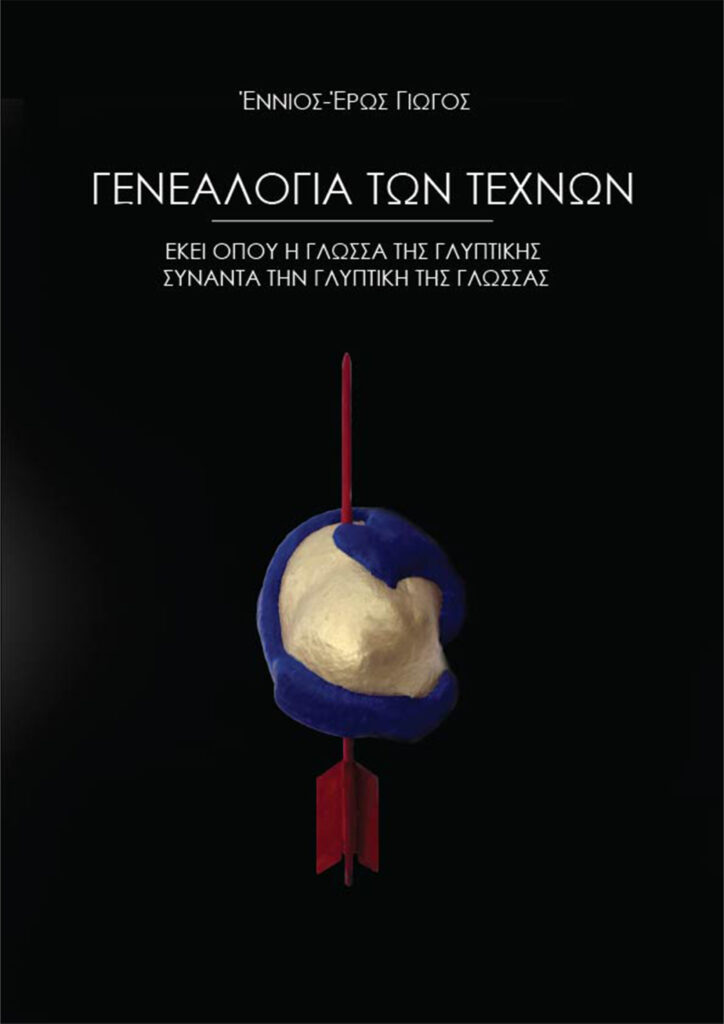
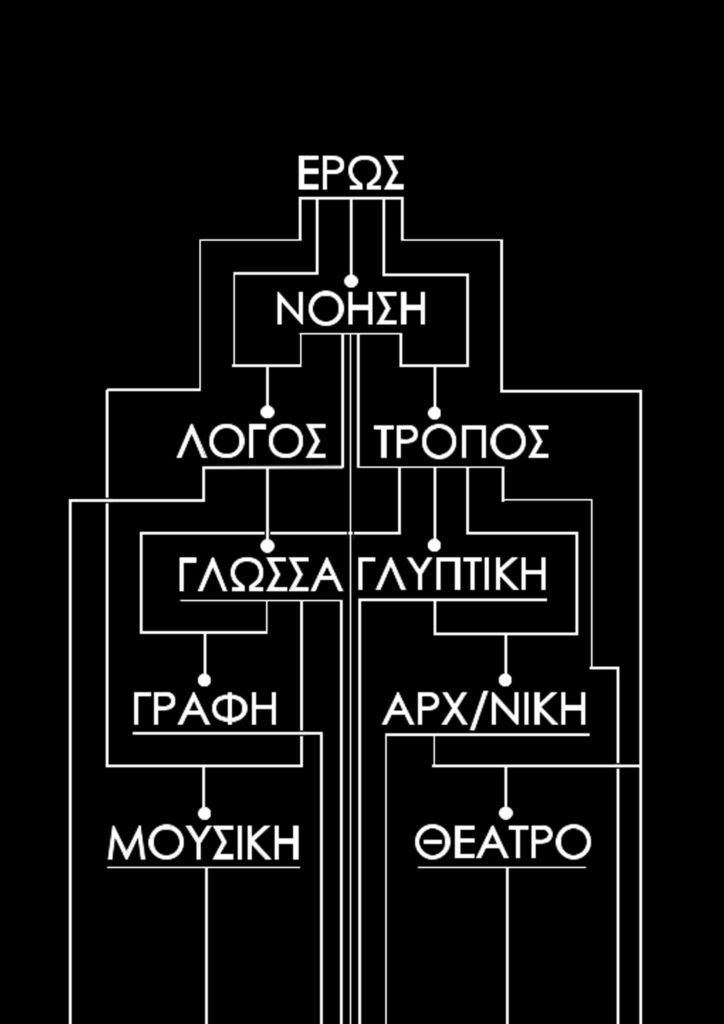
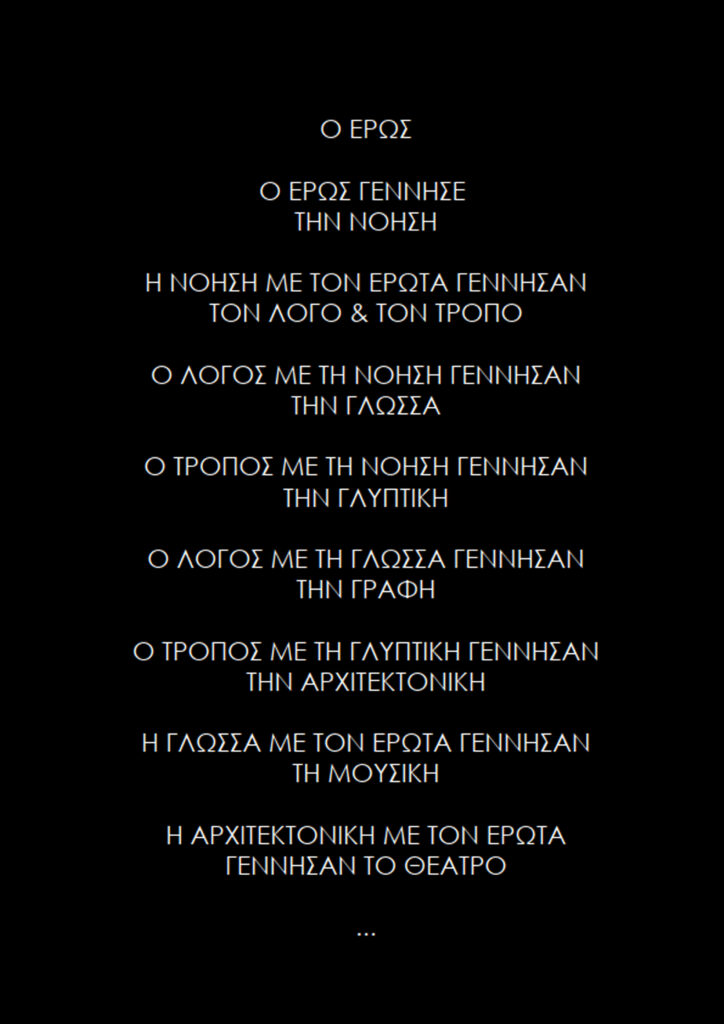
Genealogy of the Arts: a poetic mythology in which the arts are presented as figures who are wedded to one another, with a common ancestor in “Eros” – the irrational passion for life and creation.
The Sculpture of Language: a series of works that give sculptural form to the anguish of cognitive experience, turning the alphabet and geometric symbols into three-dimensional entities in space. (More information here)
Where the Language of Sculpture meets the Sculpture of Language
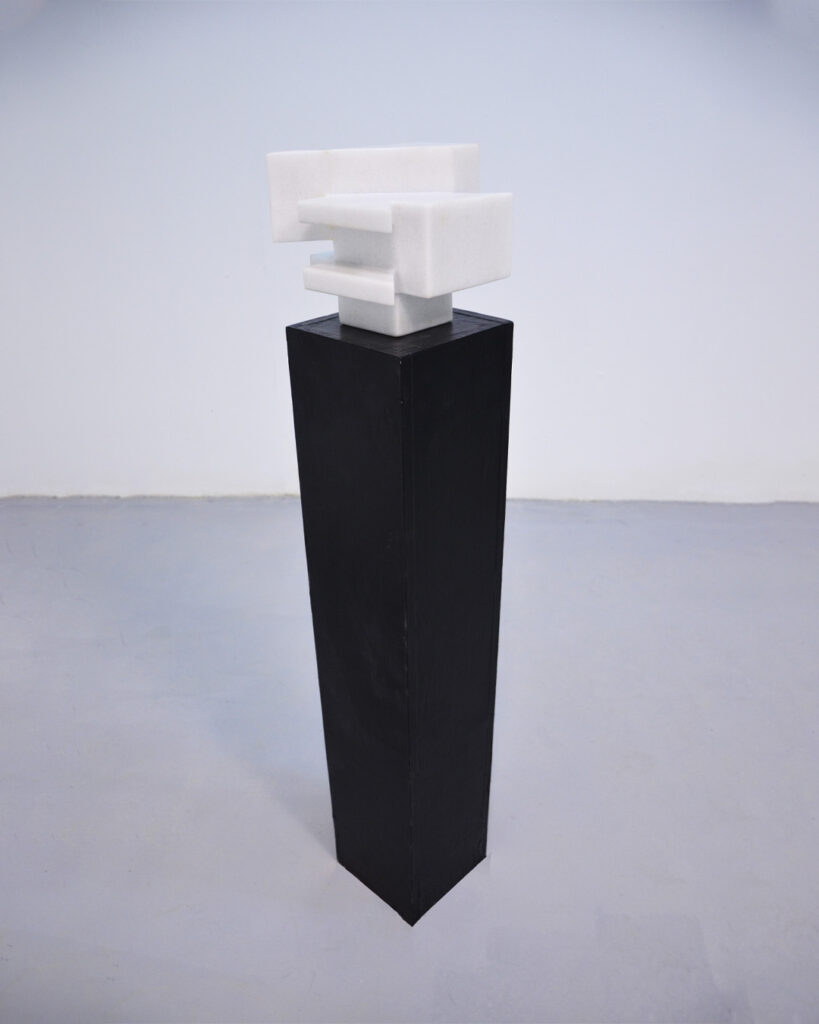
The work “-C Non-Being” The central exhibit of the presentation is the work -C Non-Being (Volumetric subtraction of the signifier from the signified). It is a cube of Naxos marble (20cm x 20cm x 20cm) from whose faces the letters of the word CUBE are successively removed. The work poses the fundamental question: “Is there Being without a Name?”.
“The limits of my language mean the limits of my world” – Ludwig Wittgenstein.
Philosophical approach & neuroscience The work moves beyond the aesthetic, exploring synaesthesia and the relationship between language and reality. Through the term “ideo-identification”, the artist argues that the bond between signifier and signified is not arbitrary, but rests on a deep neurobiological and instinctive foundation.
Exhibition details Location: University of Ioannina, School of Fine Arts.
Artist’s note: Education and learning are the cornerstone of every culture. In times of crisis, the return to the human being and to the philosophical dimension that animates each of us is the only radical method of progress.