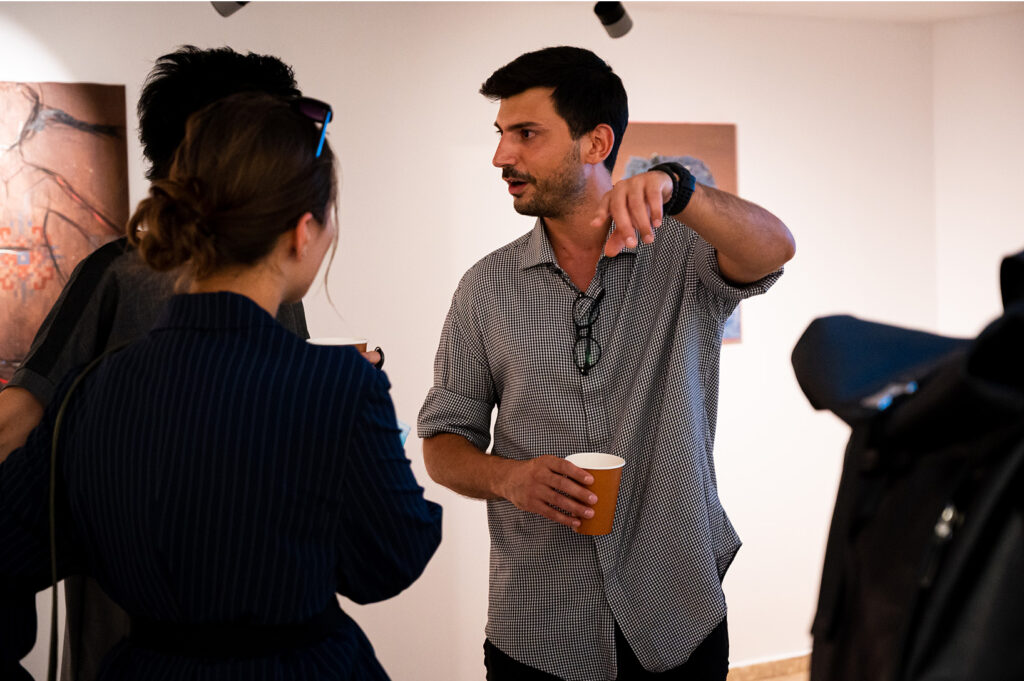
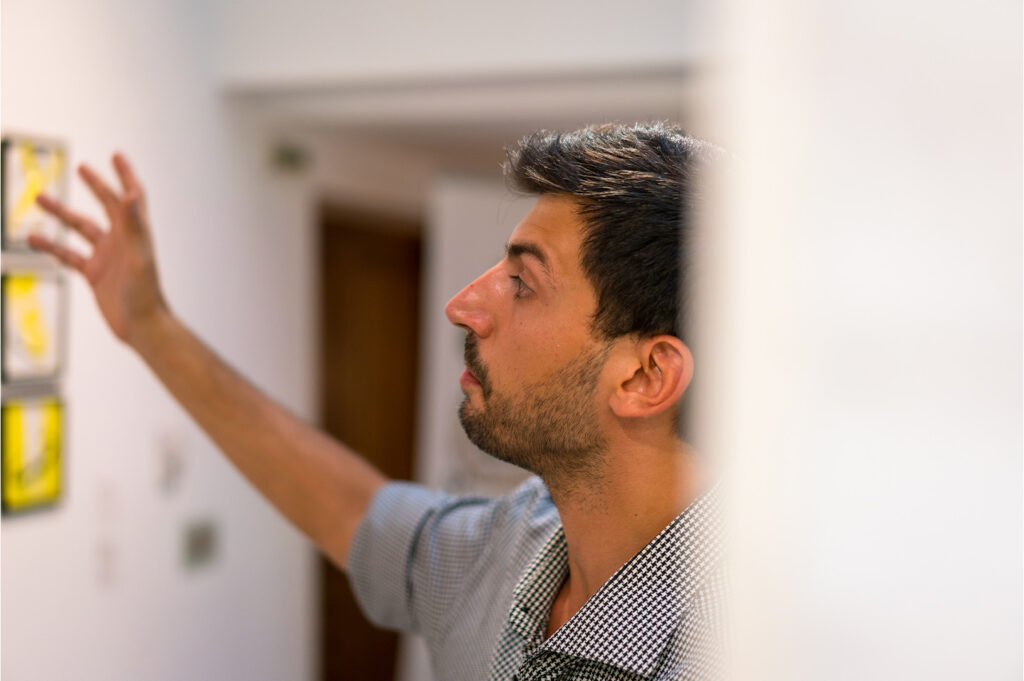
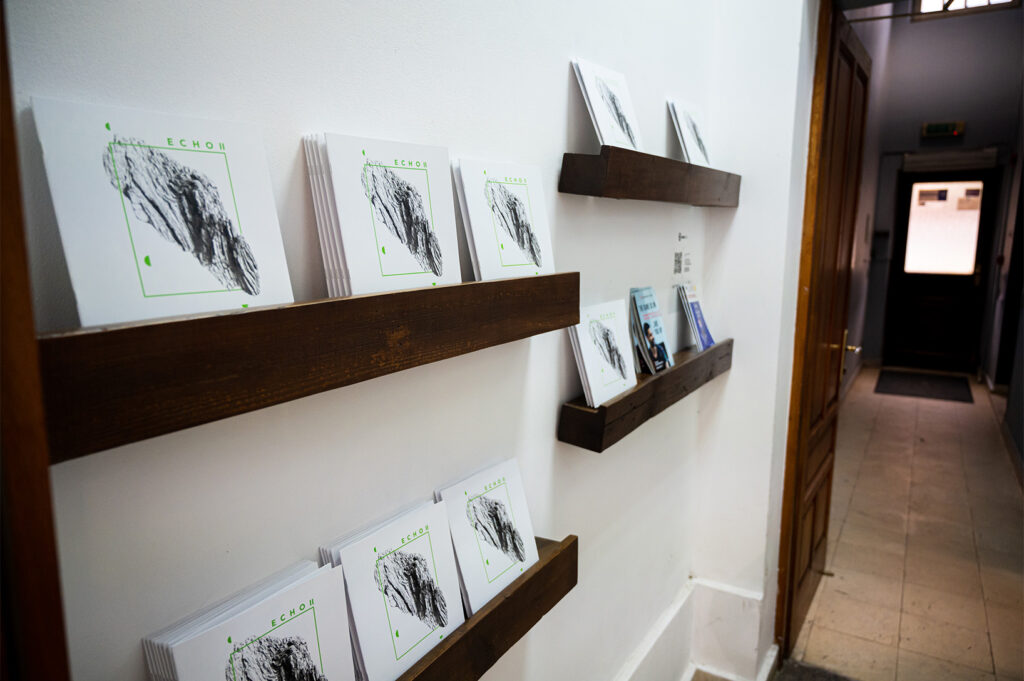
In the spring and summer of 2021, the Greek visual artist Ennios Eros Giogos was selected to represent his home country in the European art residency program ECHO II (European Cultural Heritage Outreach). Operating under the theme “Tradition in Transition” the project brought together artists from across the Balkans to explore how local heritage can be reinterpreted through the lens of contemporary art.
The Residency: A Month of Research and Creation
From May 1st to May 28th, 2021, Giogos was based in Sofia, Bulgaria, working in specialized ateliers near the Vitosha mountain and the Regional History Museum. During this month-long immersion, he delved into the city’s complex history—from its ancient roots as Serdica to its role as a modern European capital.
The Concept
“My work is a research into the ‘aesthetic of fragments’ and the mechanics of collective memory within the postmodern condition. The Coexistence project, developed during my residency in Sofia, is a conceptual evolution of my long-term study on Mourning.
The departure point was a personal memento: a prayer rope (comboskini) belonging to my father. I treat this object not as a static religious artifact, but as a universal ‘technology’ of spiritual communication. Through fieldwork with the diverse communities of Sofia—from the Roma settlements to the Arabic quarters—I identified the prayer rope as a shared thread. It is a symbol of ‘intent’ and ‘wish’ that transcends dogmas, proving that folk tradition is not a closed system, but a dynamic energy that feeds the present.”
Ennio Eros Giogos
The Concept & Artistic Research
A Bridge of Faith and Mourning The project was a conceptual continuation of Giogos’s previous research into the themes of mourning and tradition, specifically focusing on the prayer rope (comboskini) as a symbolic object. For the residency, he proposed the prayer rope as a universal tool of spiritual practice that transcends religious boundaries, found in similar forms across Christianity, Islam, and Hinduism.
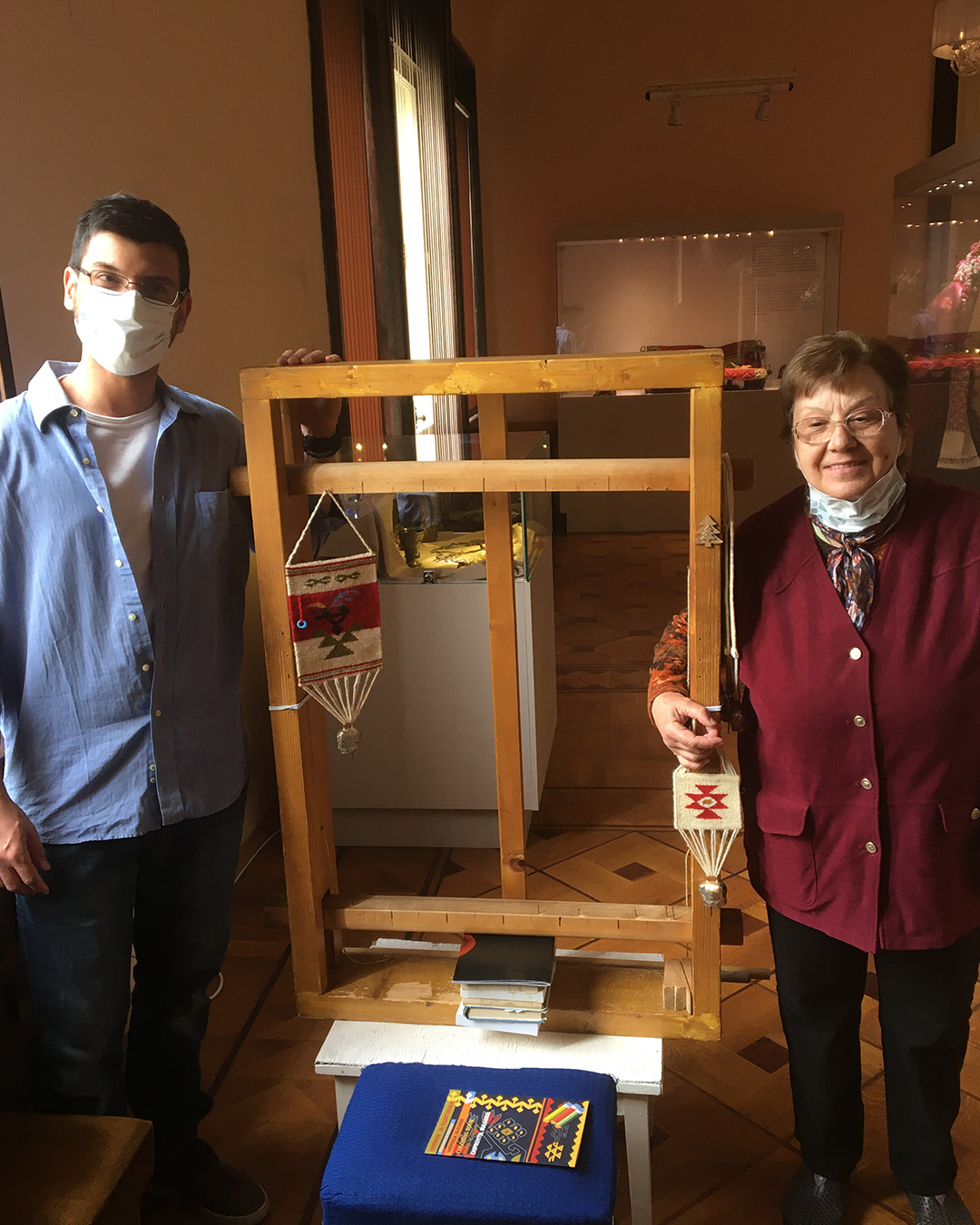
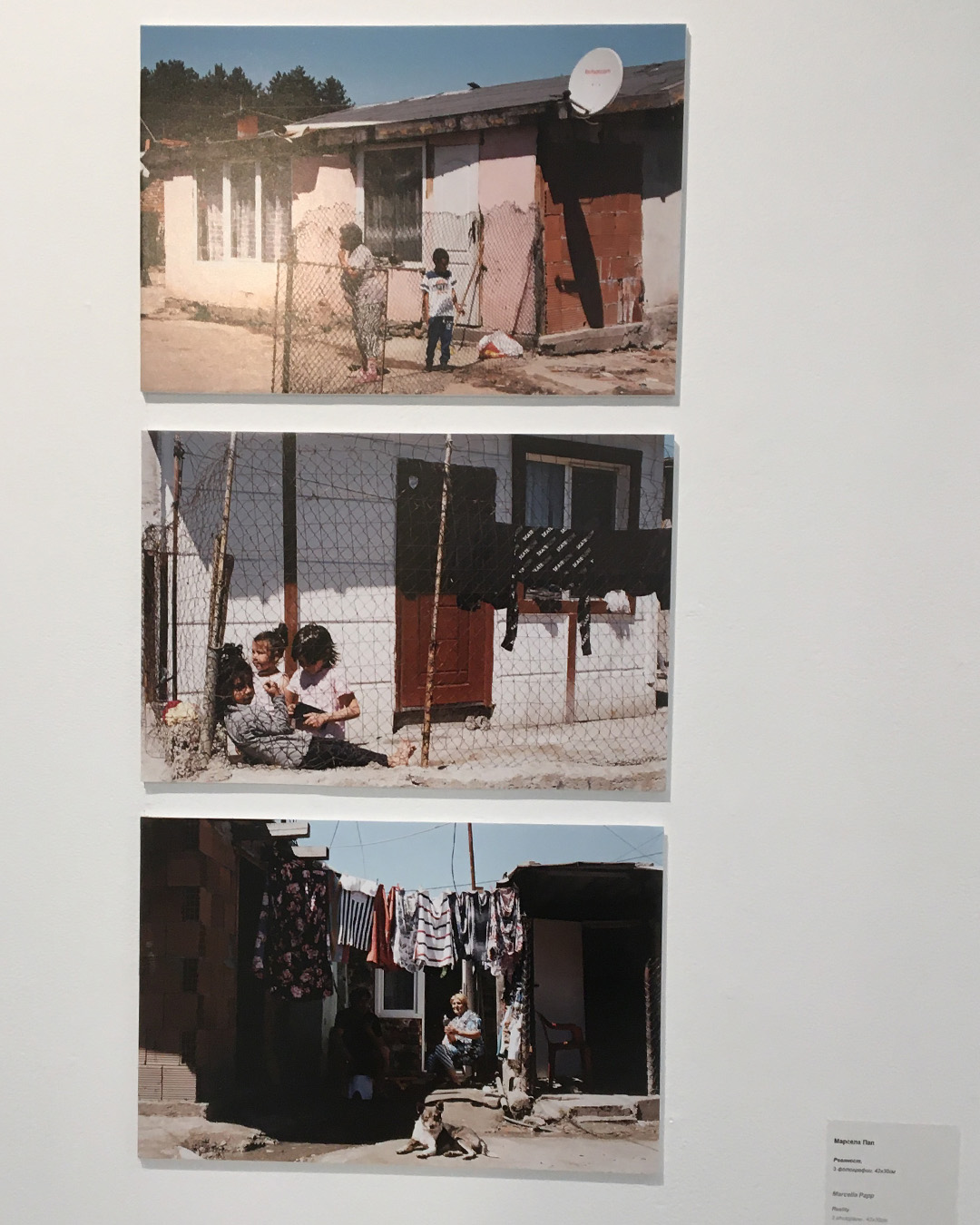
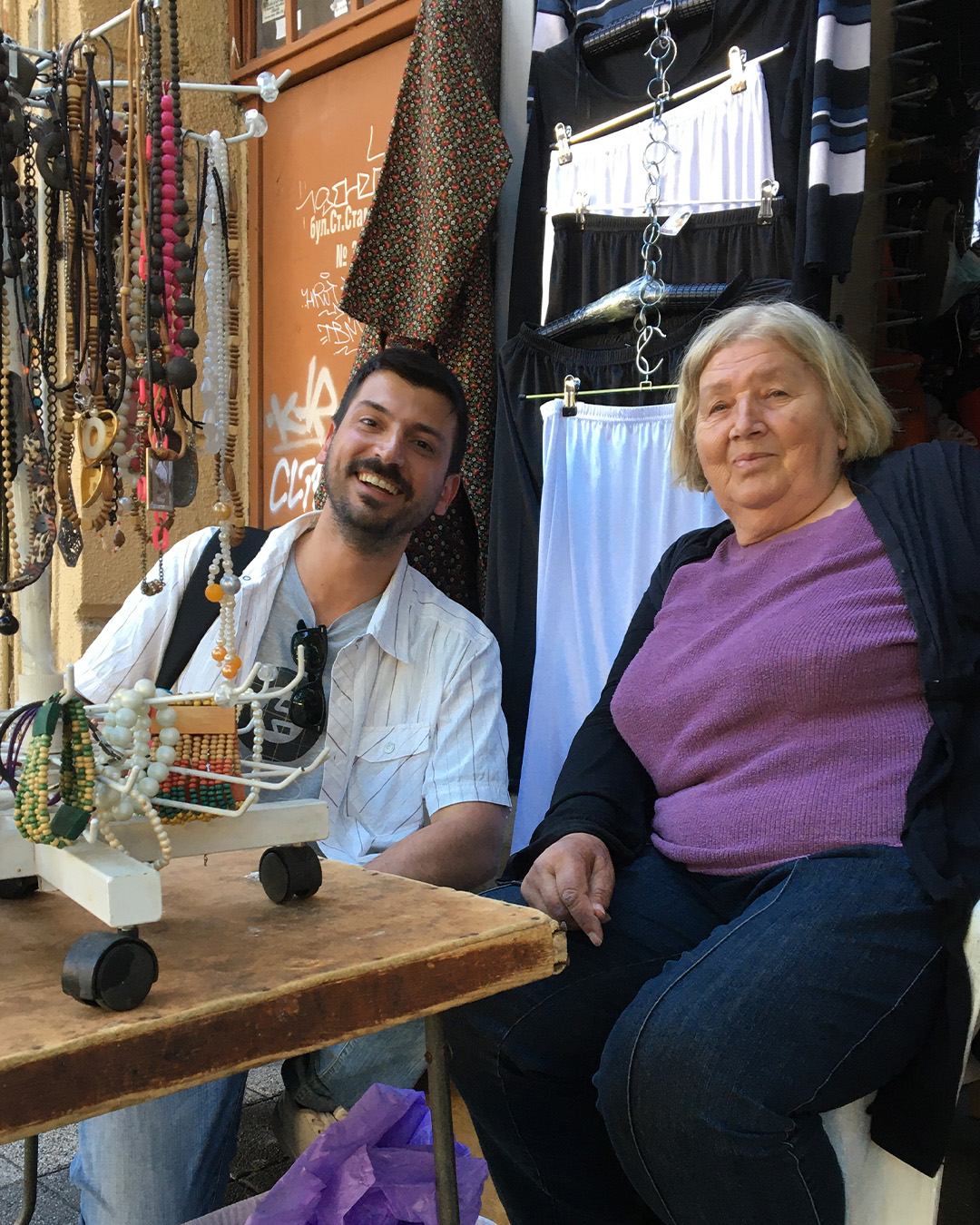
Fieldwork and Cultural Coexistence During his time in Sofia, Giogos conducted a series of interviews with diverse local groups, including the Roma community, women’s craft guilds, and the Arabic community. His research revealed that the practice of using prayer beads or ropes is a shared thread among these seemingly different minorities.
The Installation Structure
In the final installation of “Coexistence,” the prayer rope serves as the primary morphological tool:
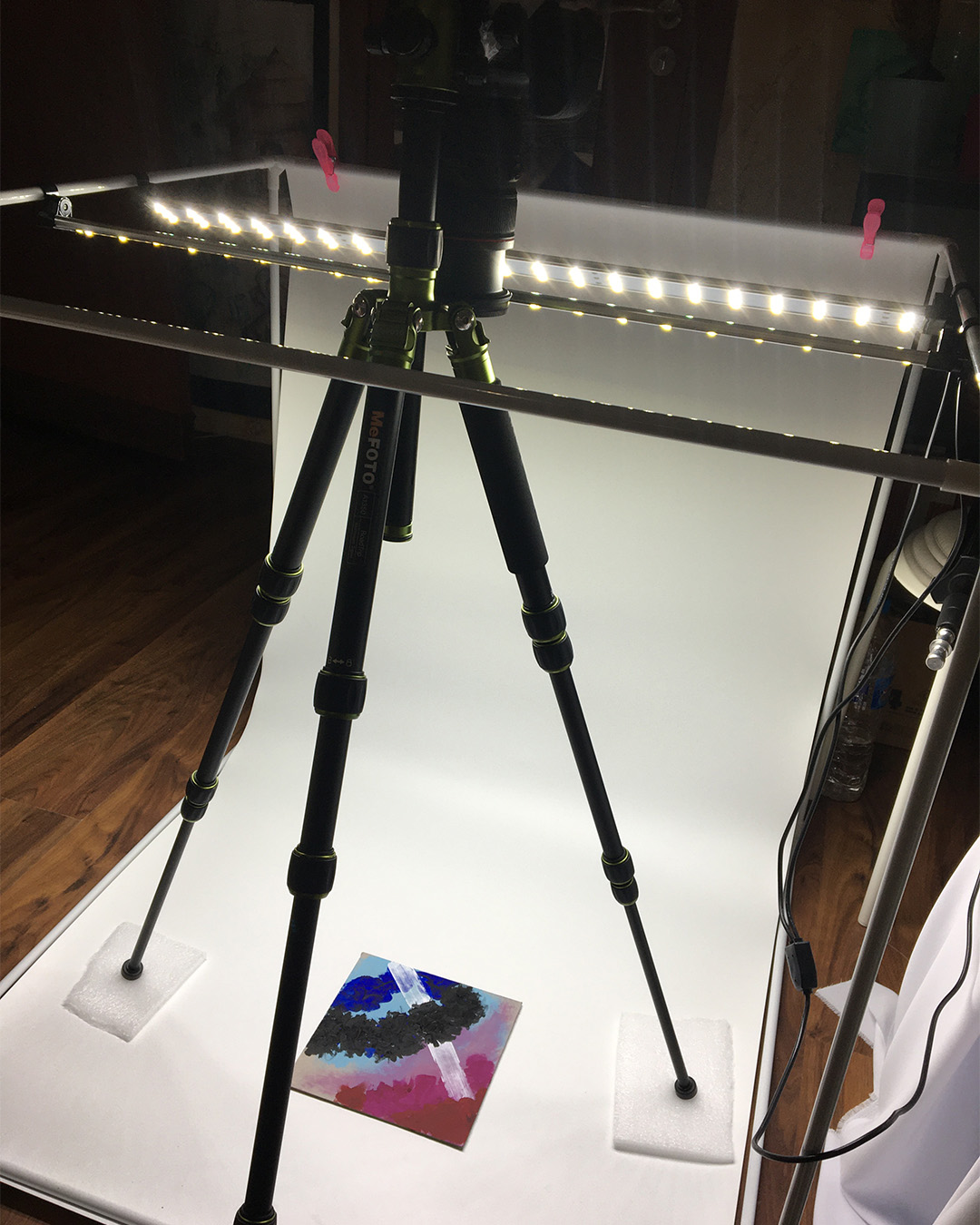
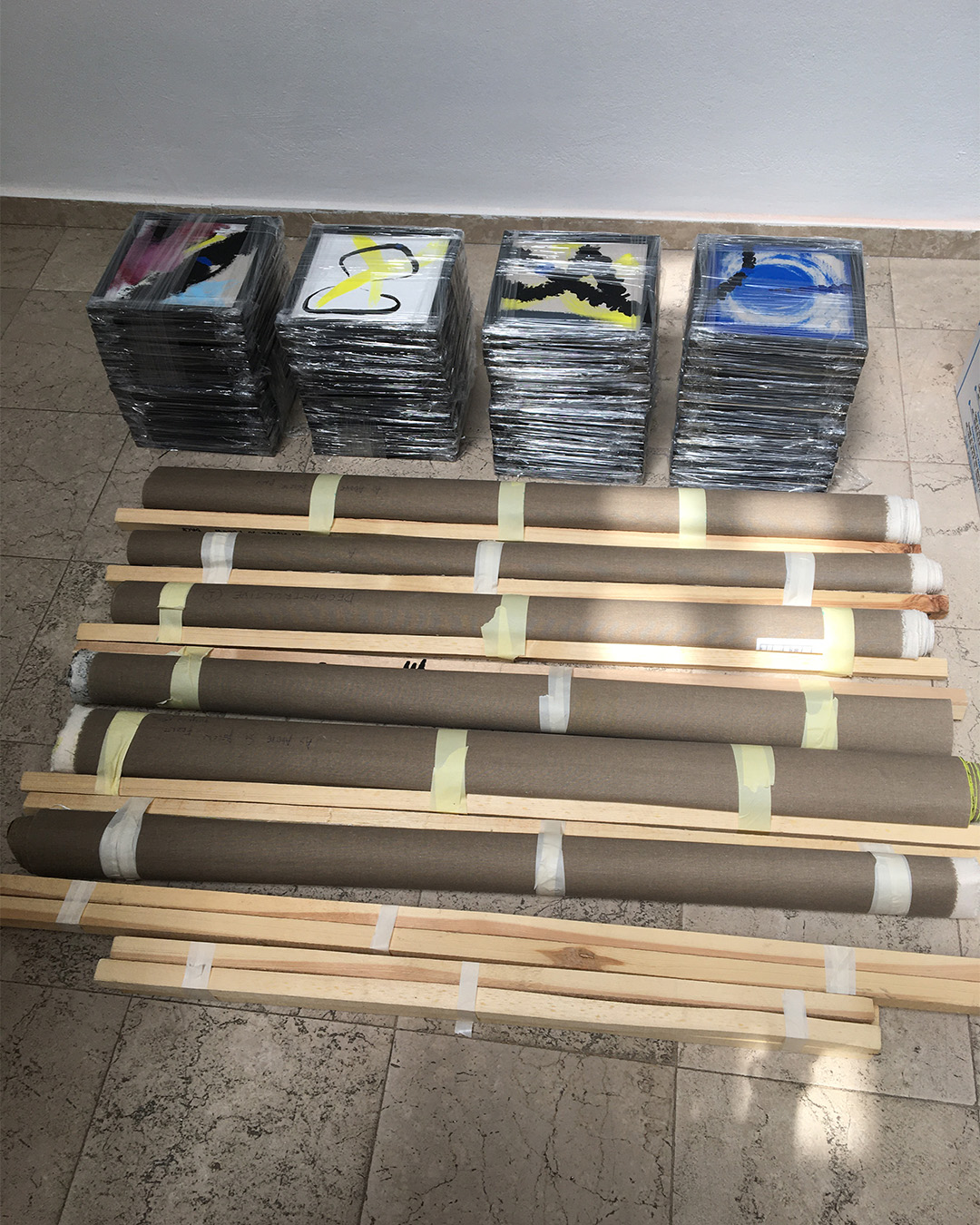
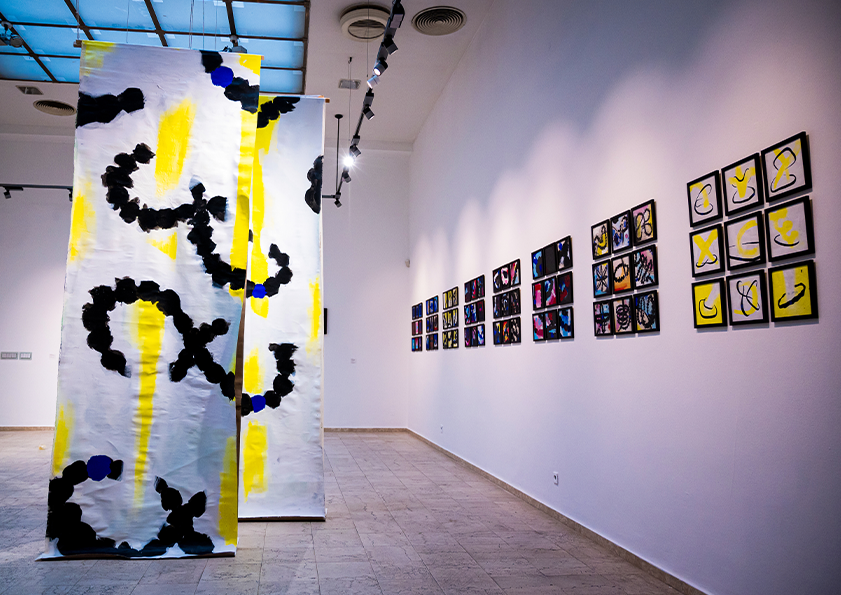
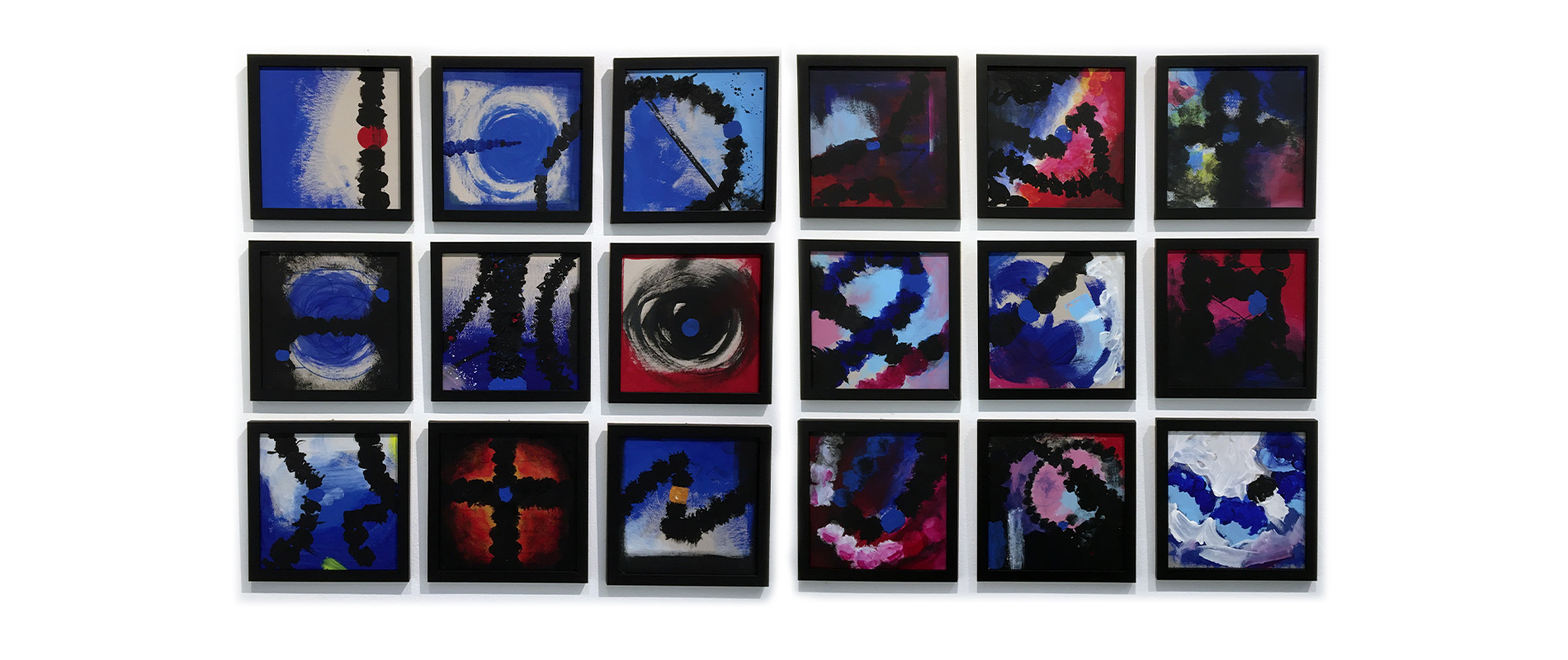
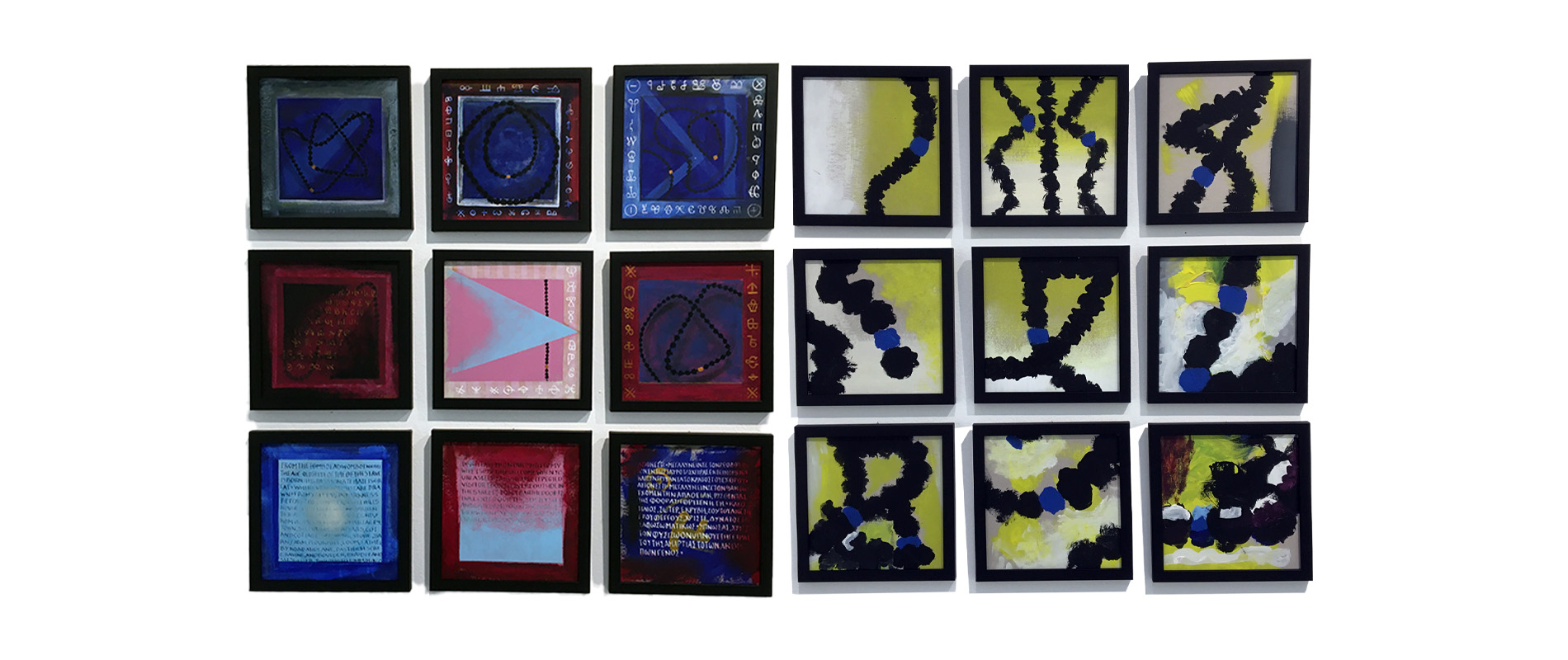
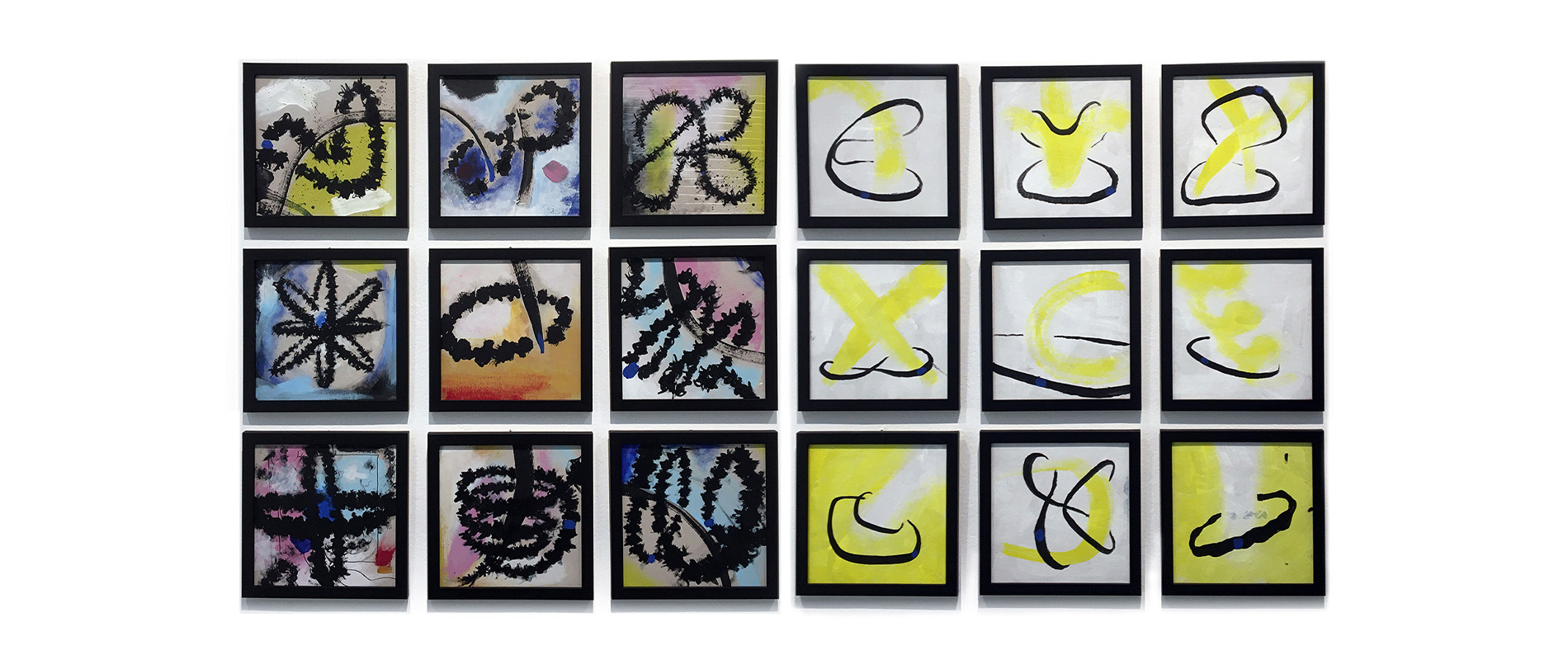
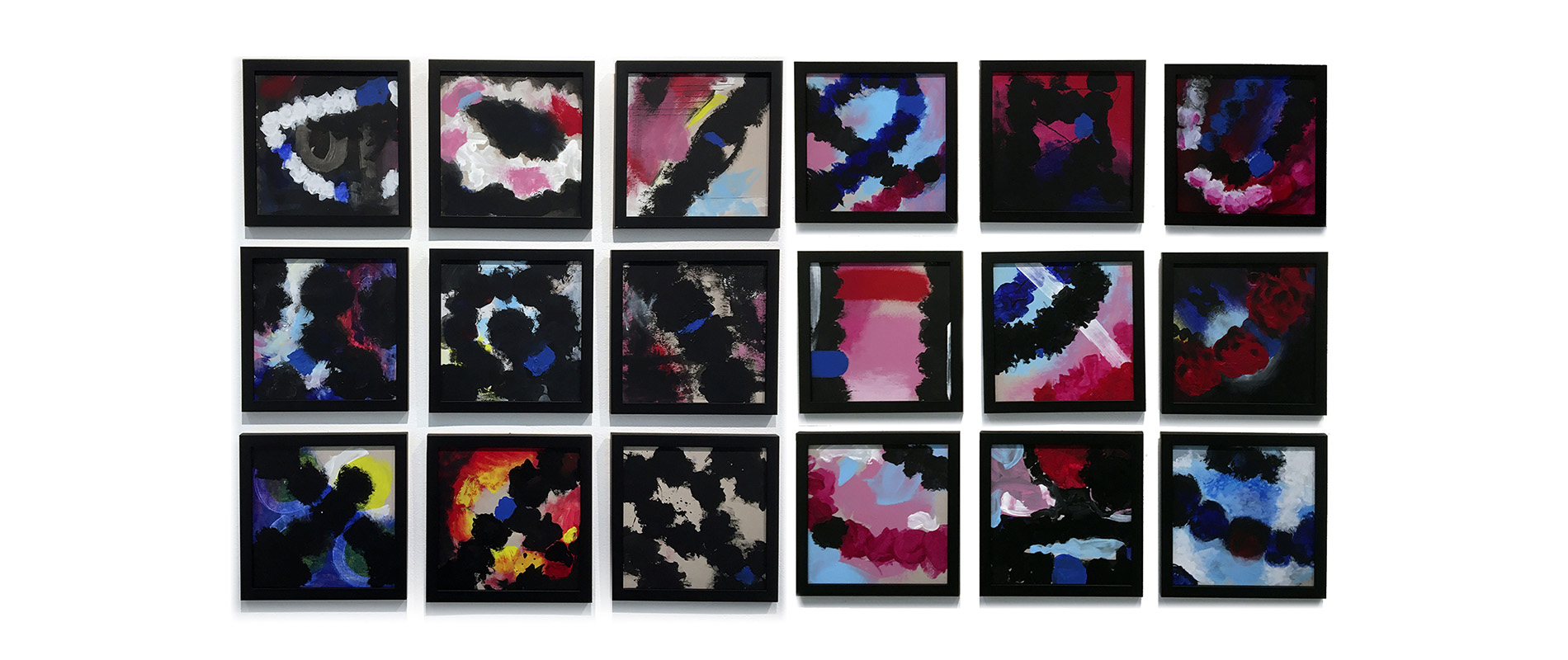
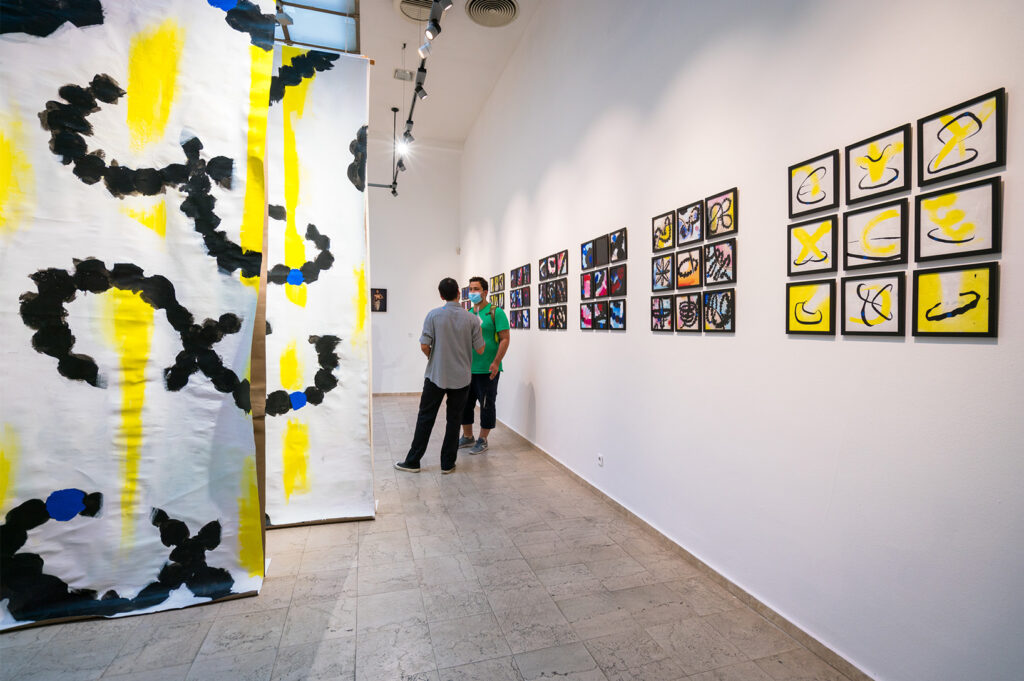
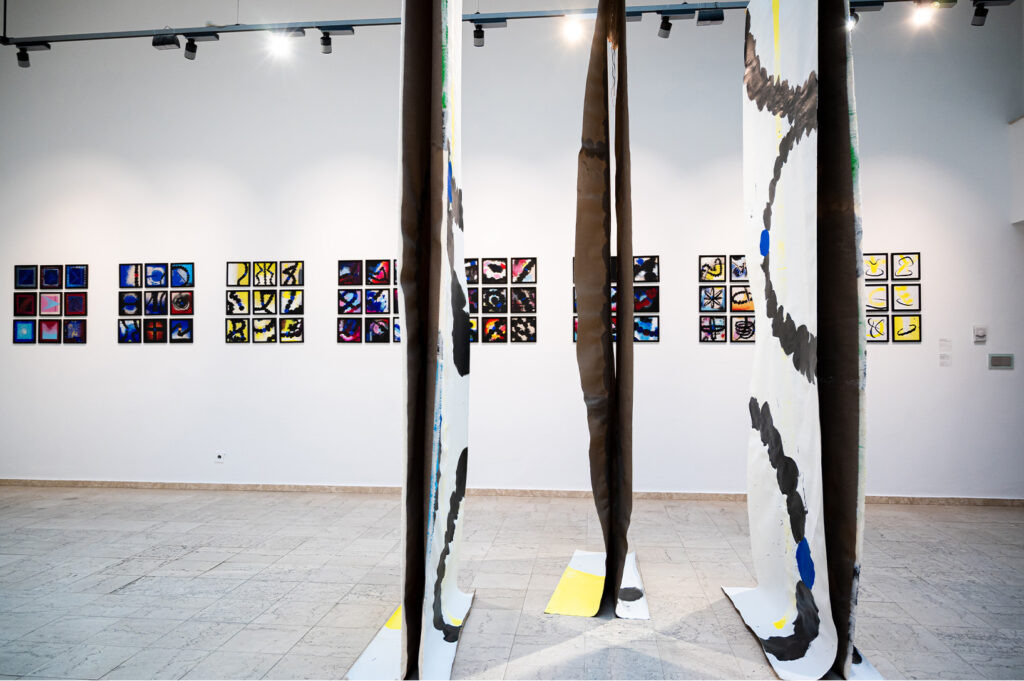
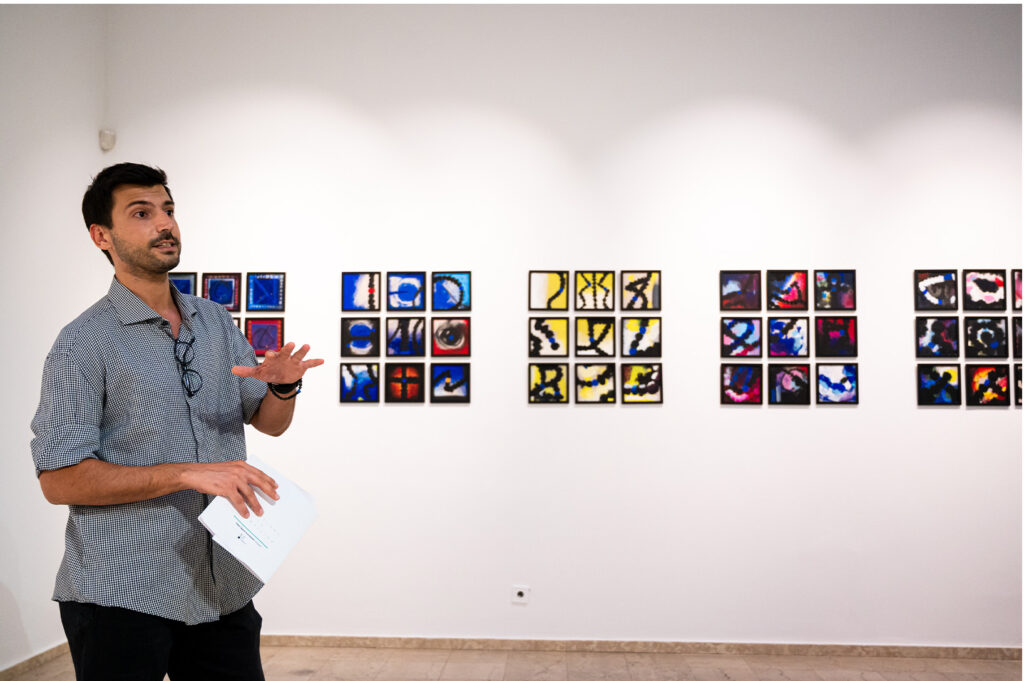
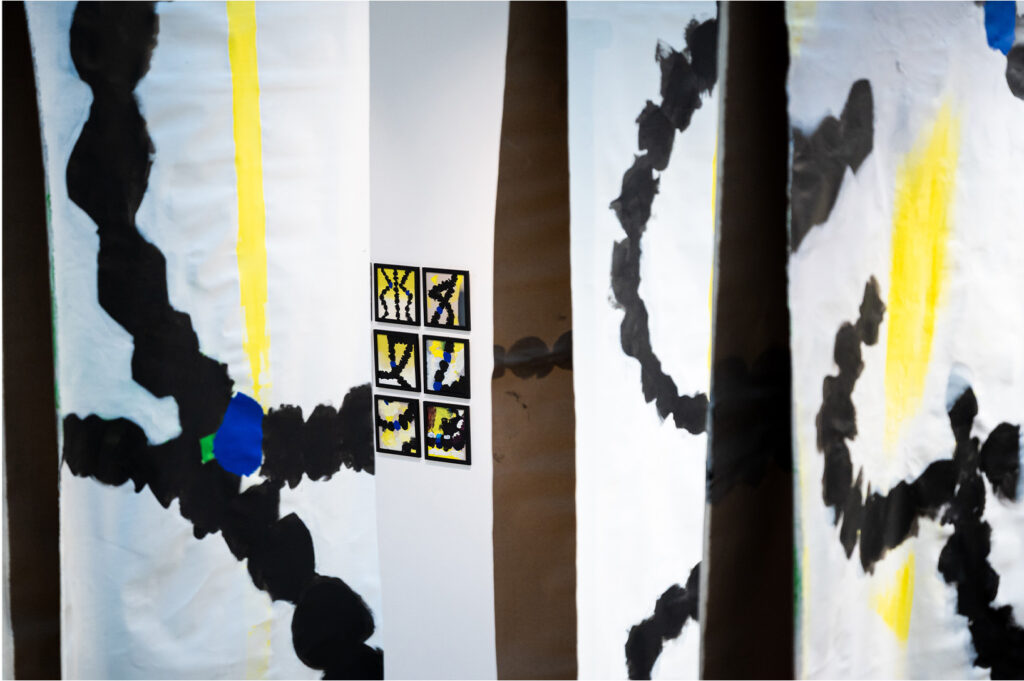
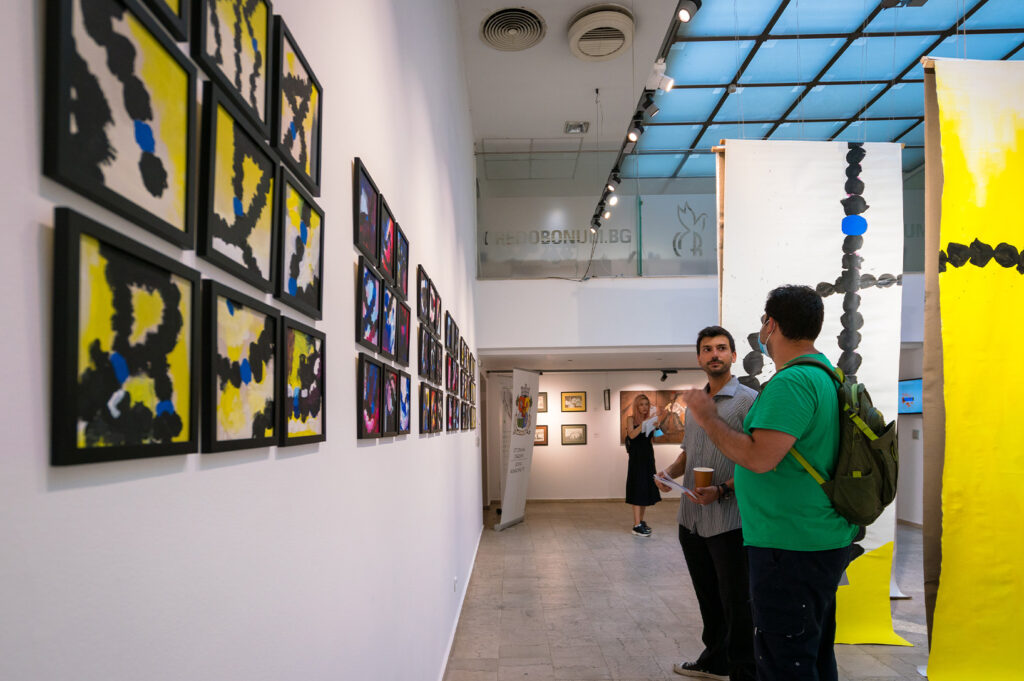
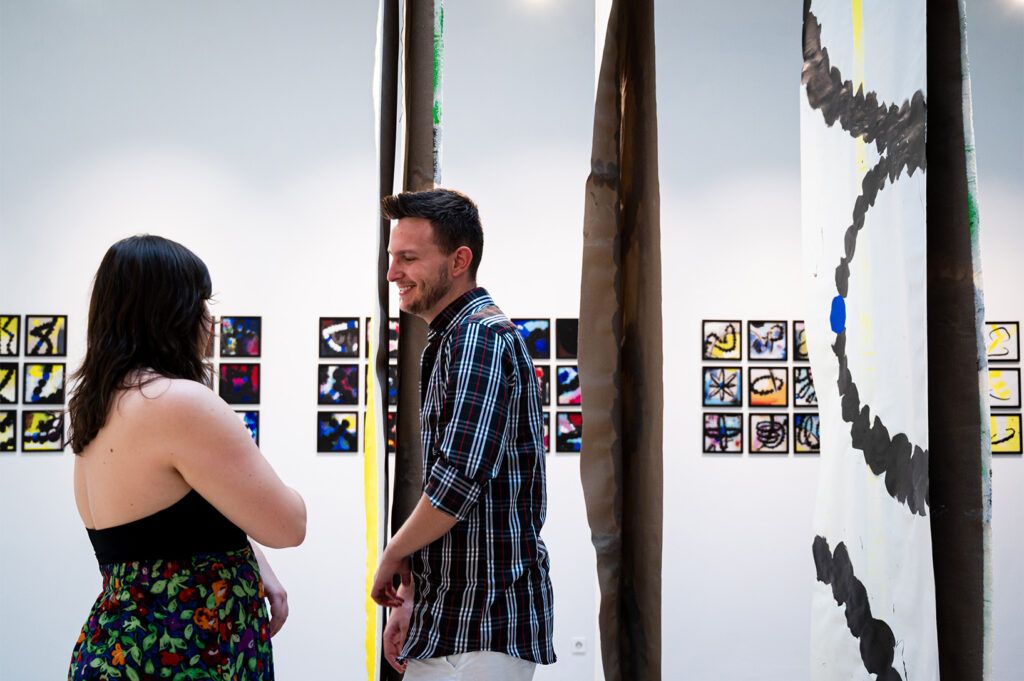
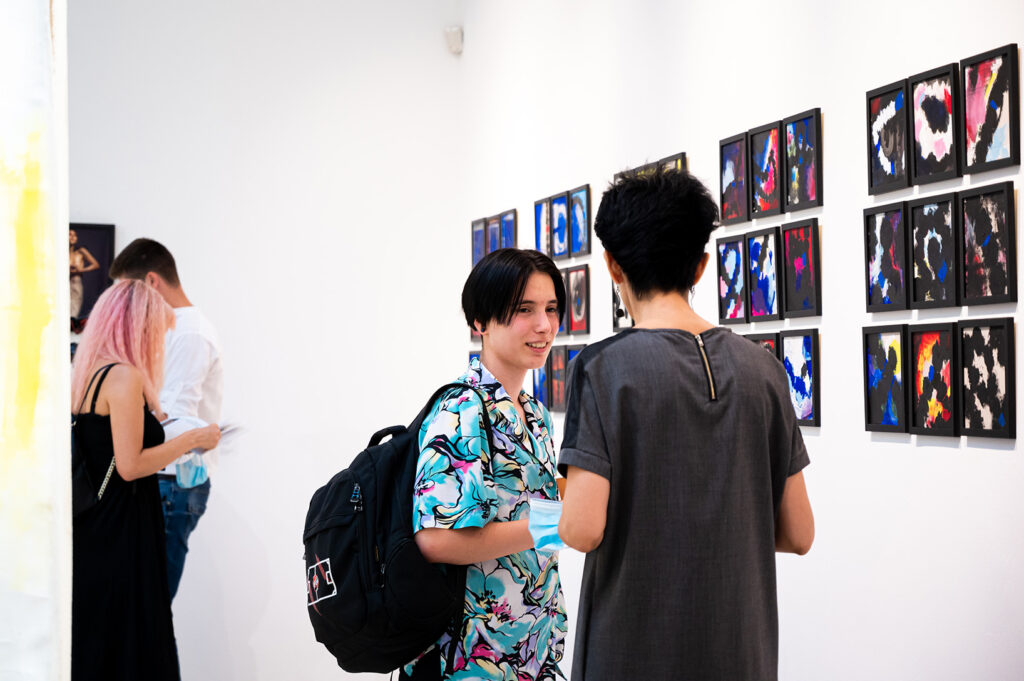
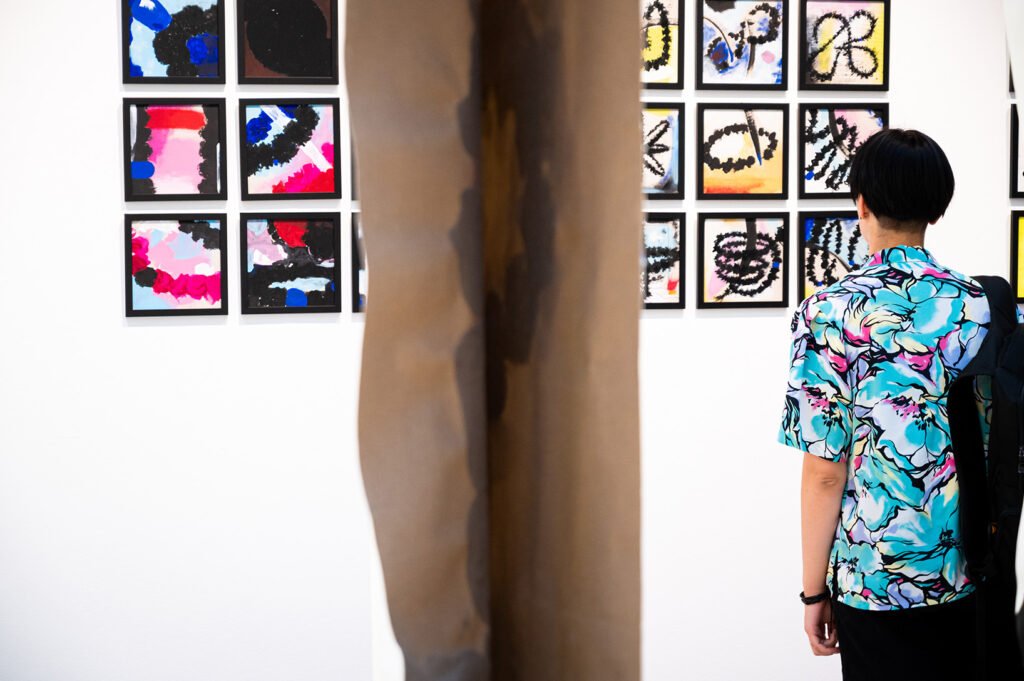
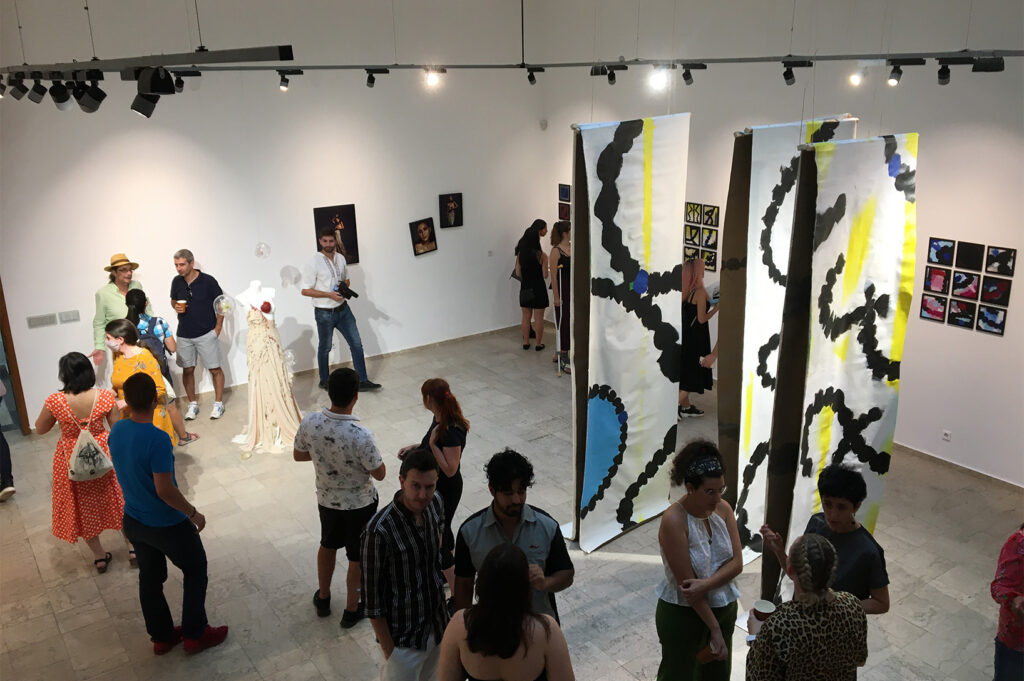
1. The 72 Fragments (The Modular Grid) A series of 72 mixed-media works (20x20cm), organized in eight distinct groups. Drawing from the Zen tradition of Enso circles, the works deconstruct and re-synthesize elements of the Greek and Ancient Bulgarian alphabets. Each fragment represents a specific community, illustrating the tension between individual intention and collective harmony.
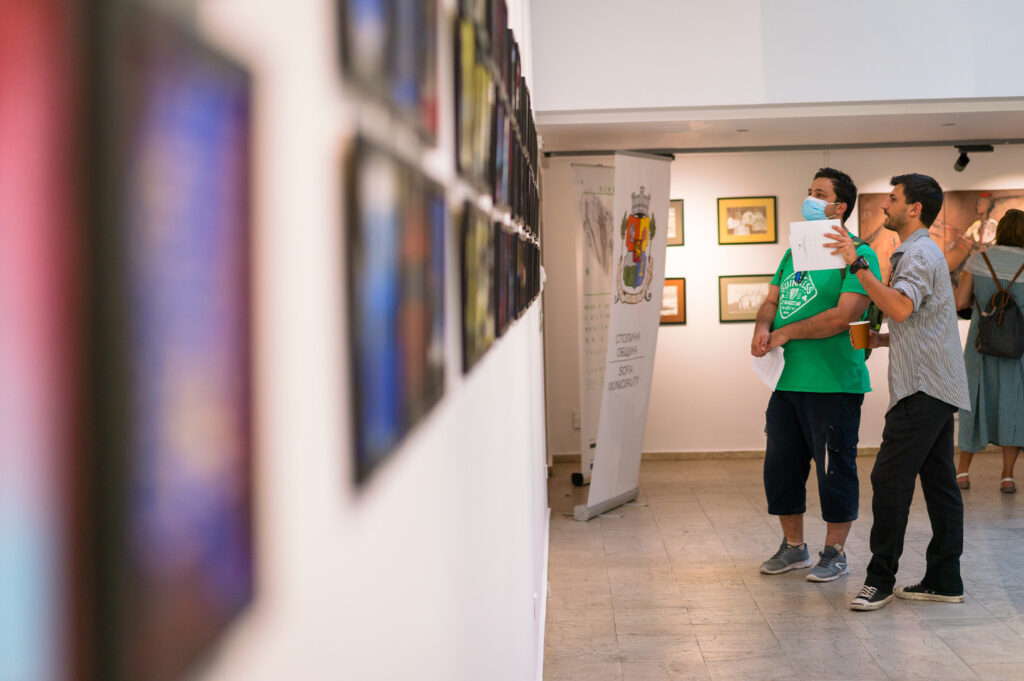
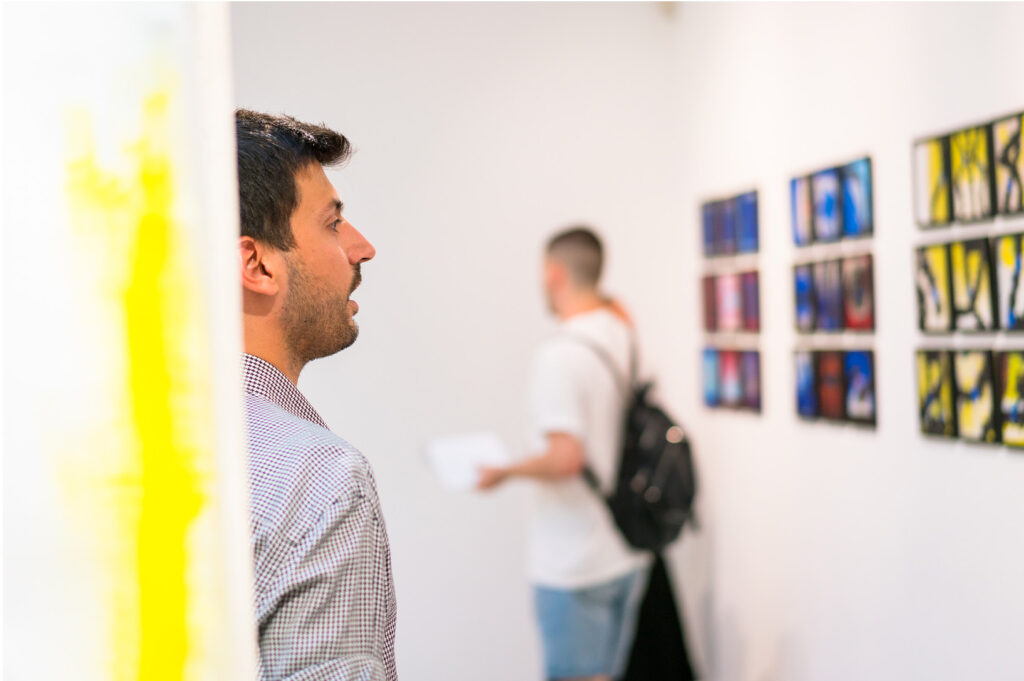
Coexistance 2021/ In situ installation/ Credo Bonum Gallery, Sofia (BG)
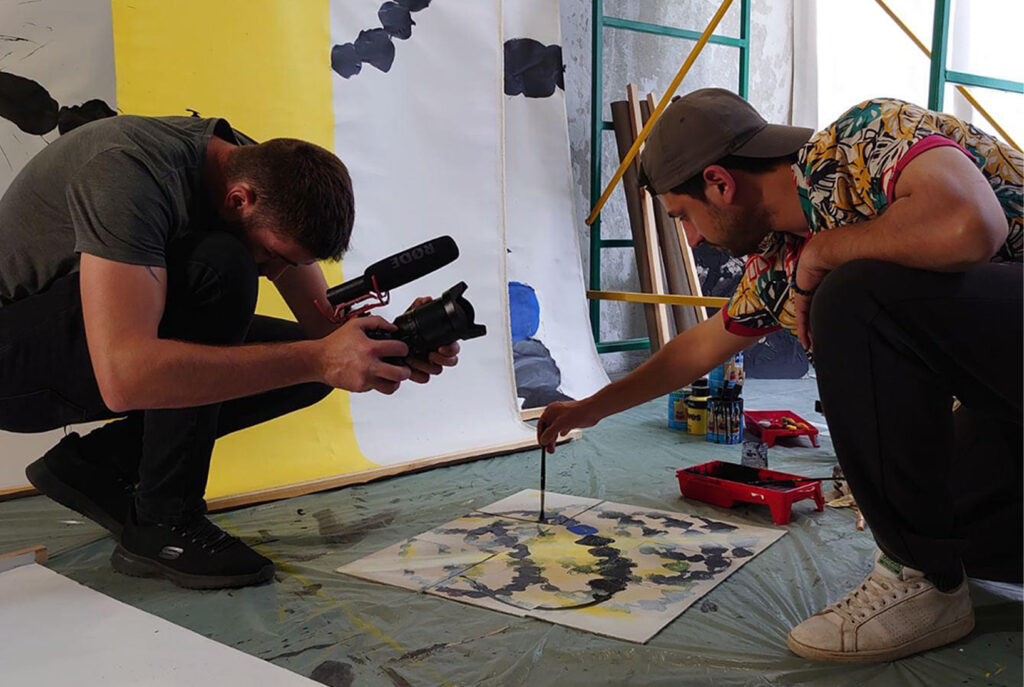
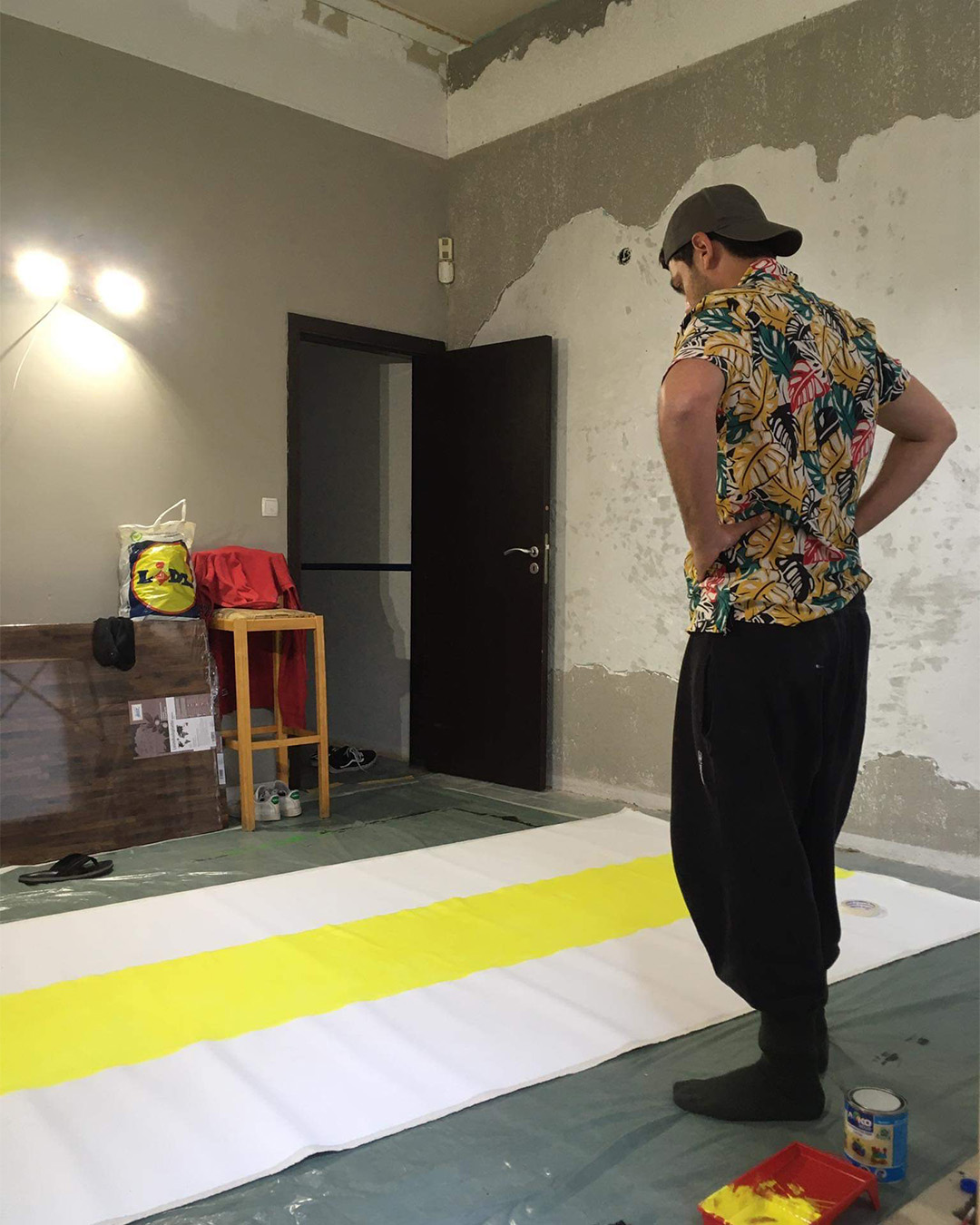
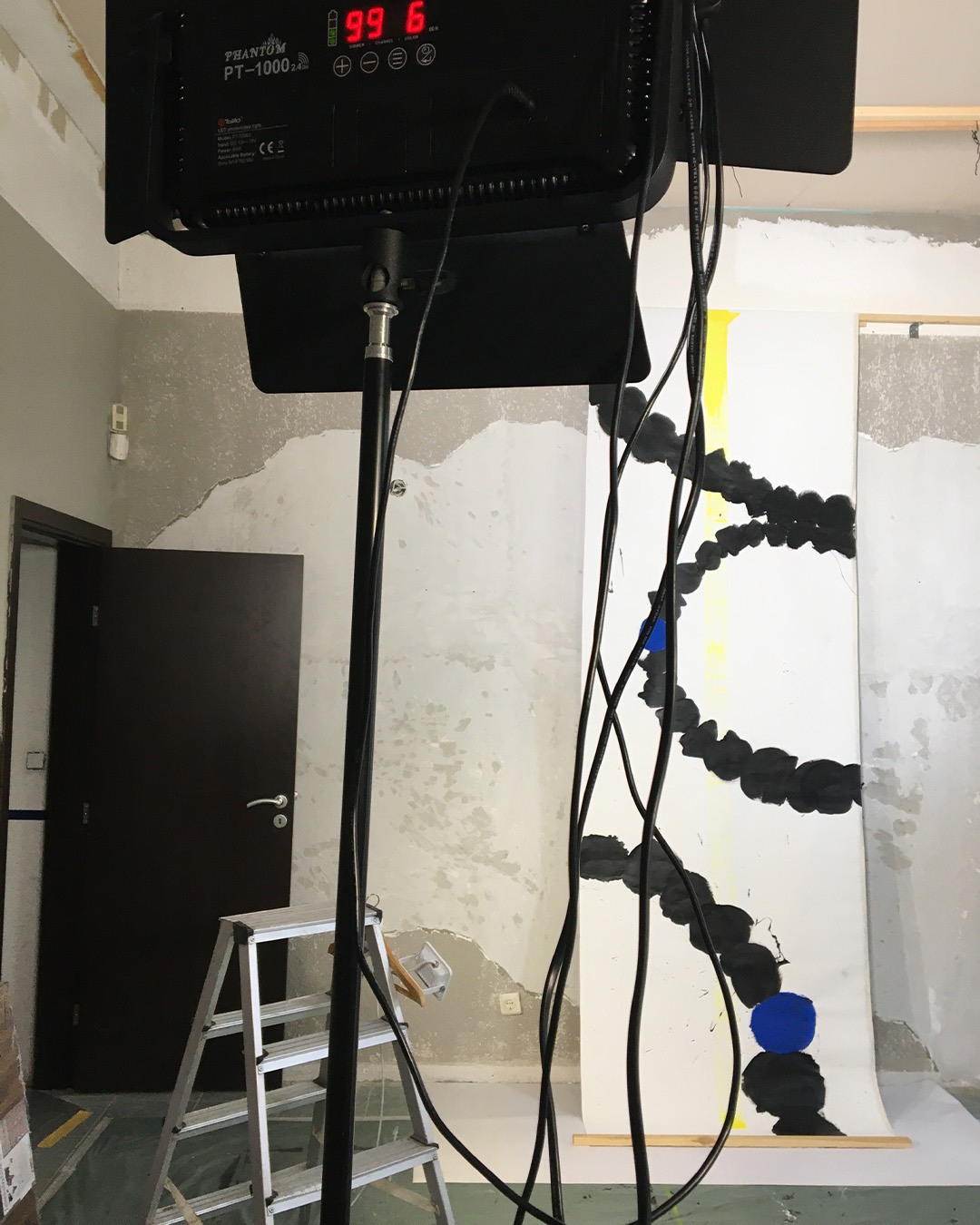
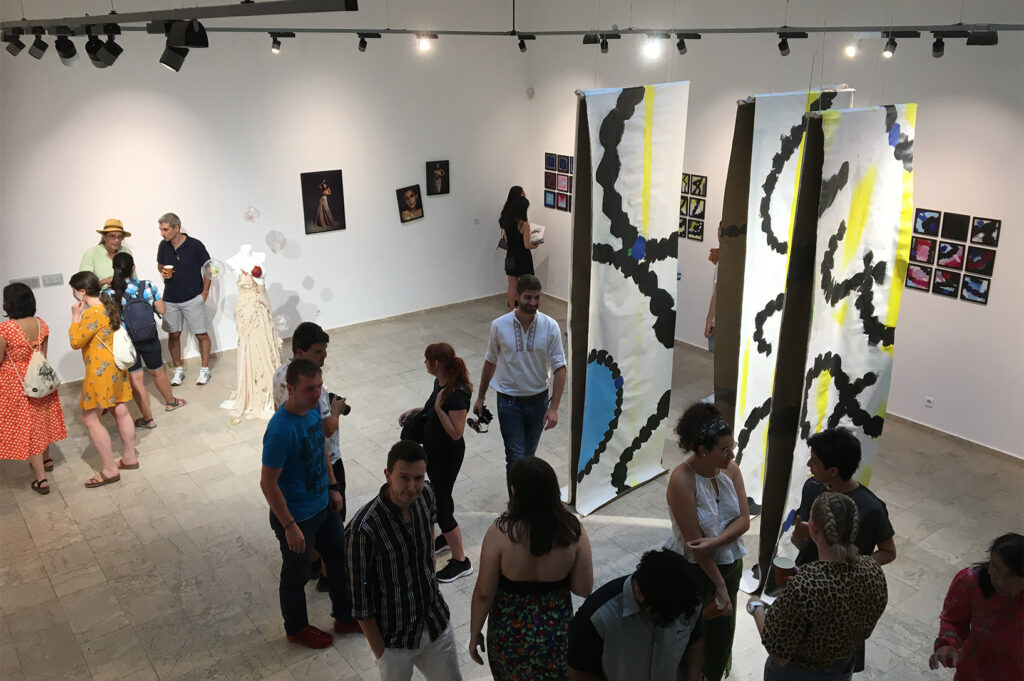
2. Spatial Anamorphosis (The Viewer’s Perception) Large-scale suspended canvases (reaching 333cm) utilize anamorphic perspective. These are ‘paintings of the retina’ where the image—featuring symbols like the Golden Ratio (Φ) and the Infinity sign—resolves only from specific vantage points. This spatial play mirrors the way we approach social and personal challenges: the ‘truth’ of the image depends entirely on the viewer’s position and perspective.
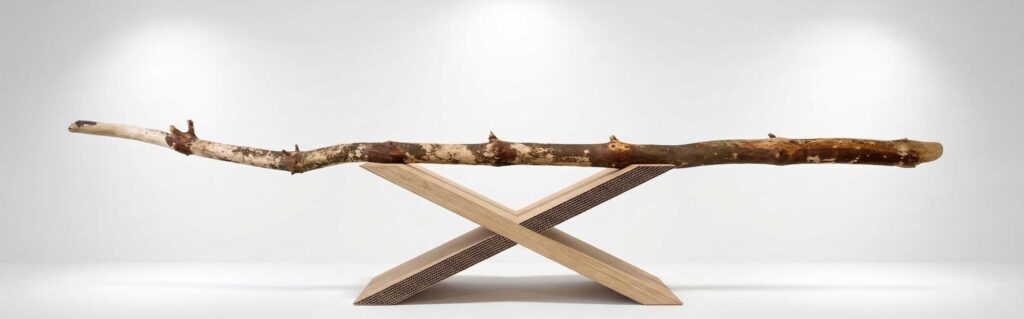
3. Mortality (The Found Object & Ritual) The centerpiece is a sculptural installation featuring a wooden hiking stick discovered in a cave on Mount Vitosha. Used as an extension of the brush during the painting process, the stick embodies a shamanic ritual. It acts as a bridge between the urban environment and the primordial energy of the mountain, serving as a horizontal axis that symbolizes mortality and the lost harmony between man and nature.
Mortality/ Installation/ found wood hikin stick vitosha mountain/ 2021
The Exhibition at Credo Bonum Gallery
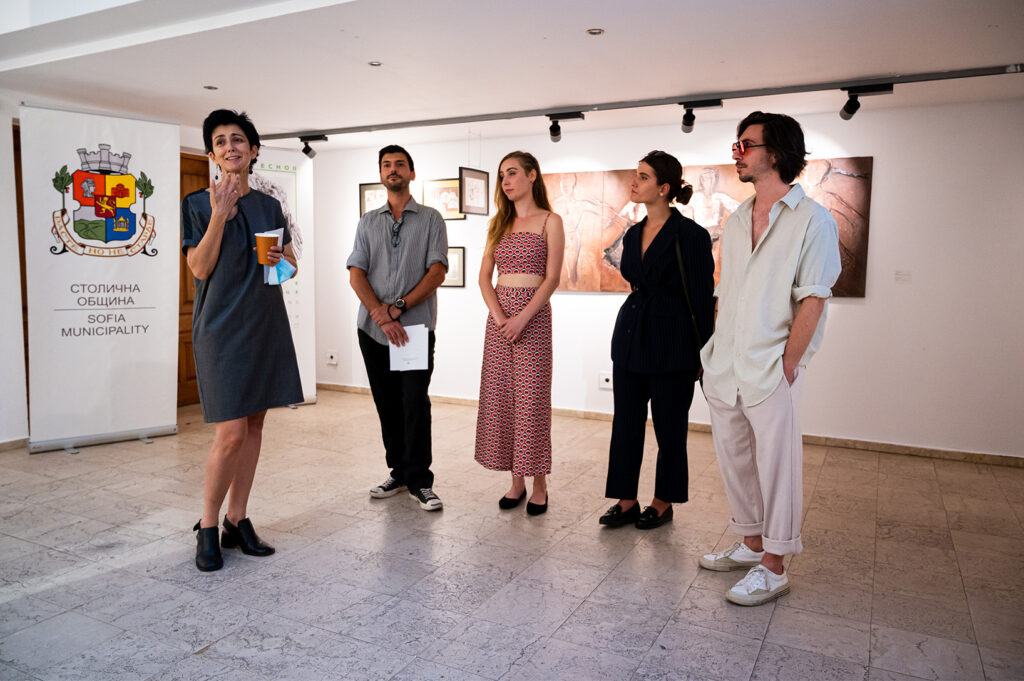
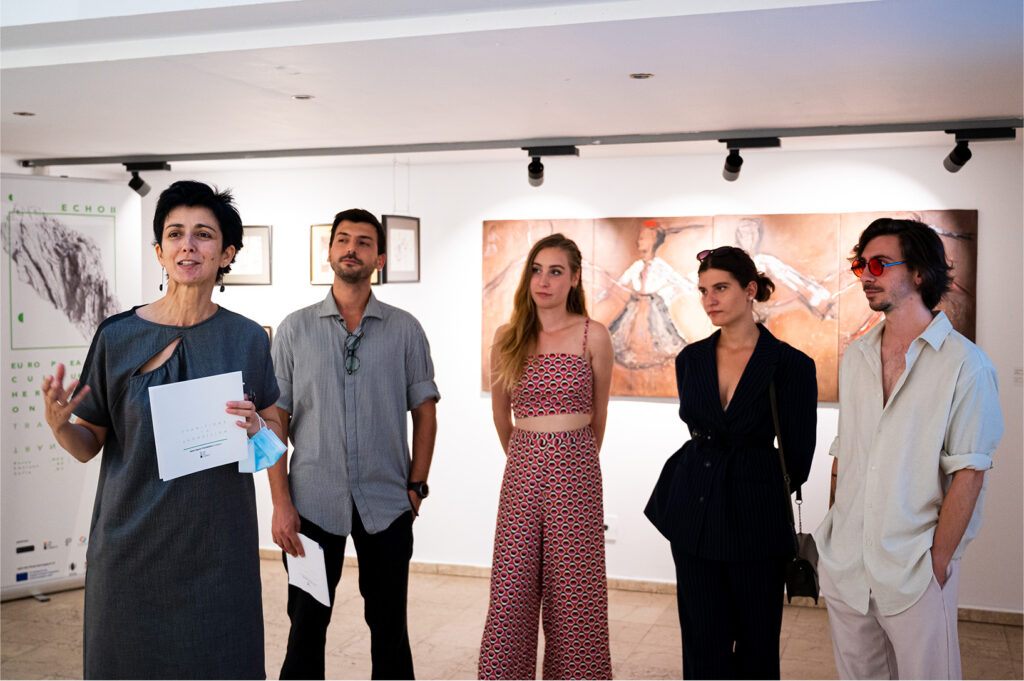
The final works were unveiled at the Credo Bonum Gallery, one of Sofia’s most representative contemporary art spaces. Curated by Vessela Nozharova, the exhibition “Tradition in Transition” ran from July 29th to August 20th, 2021.
Giogos’s contribution, “Coexistence,” stood as a testament to the power of transnational mobility. By placing Greek contemporary techniques in dialogue with Bulgarian heritage, the installation invited the public to reconsider how we inhabit a shared European identity.